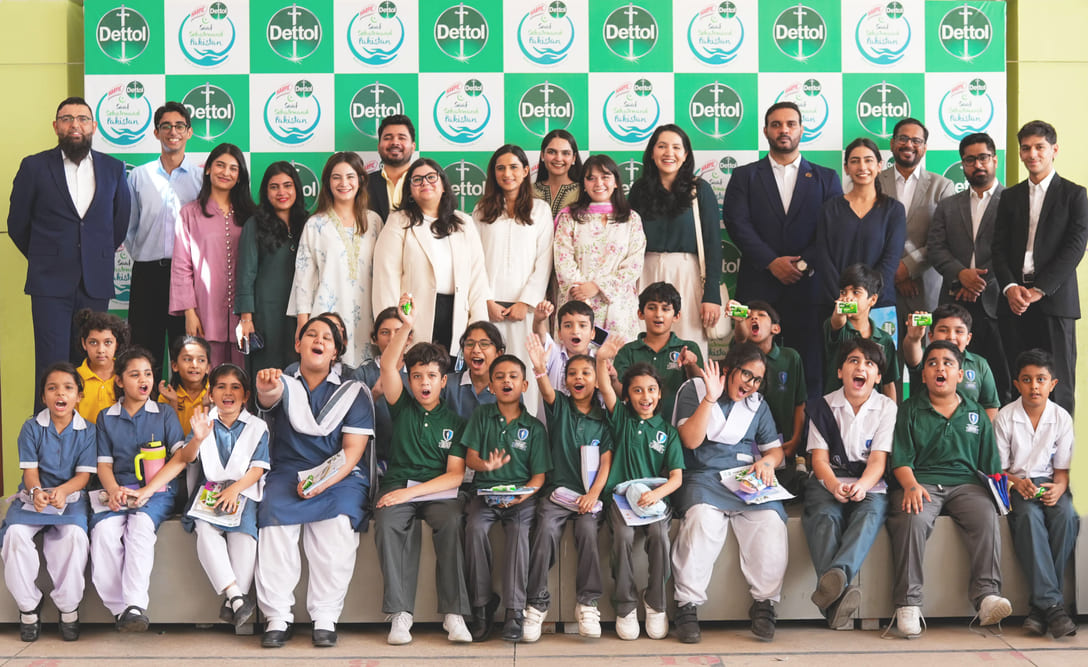
From classrooms to communities: building healthier habits on Global Handwashing Day
Across India, Pakistan, Nigeria, Kenya, South Africa and Uganda, Reckitt is supporting healthier communities through hygiene education, sanitation and innovation.
Dettol Banega Swasth India has entered its 13th season, with plans to expand its reach from 1 million to 1.4 million schools across India.
Reckitt Pakistan has launched Saaf Sehatmand Pakistan with the Aga Khan Foundation, helping expand access to safe water, sanitation and hygiene education in schools.
Across Nigeria, Kenya, South Africa and Uganda, Reckitt programmes are helping children, families and communities build healthier habits through education, access and innovation.
Handwashing is one of the everyday actions that can play a critical role in protecting health and preventing disease.
At Reckitt, we're committed to working with partners and communities to improve access to hygiene education, safe water and sanitation, to help make healthy habits part of everyday life.
This year, Reckitt teams across India, Pakistan, Nigeria, Kenya, South Africa and Uganda celebrated Global Handwashing Day through initiatives that improve hygiene awareness, strengthen access to sanitation and safe water, and inspire healthier behaviours among children and families.
India: Reaching millions through hygiene education
On 2 October, Dettol Banega Swasth India entered its 13th season, bringing together leaders from government, healthcare, education and civil society to explore how collective action can help create a healthier future for India. The milestone marks the next chapter in one of the country's largest health and hygiene behaviour-change movements.
Over more than a decade, the programme has reached 30 million children across 1 million schools, helping children understand how simple everyday behaviours can protect their health. The new season will build on that success, with plans to expand the programme's reach to 1.4 million schools.
Working with educators, healthcare professionals, government and community leaders, the programme helps children turn health knowledge into lasting habits.
The impact extends beyond awareness. Among children exposed to the programme, 95.1% showed greater awareness of the link between handwashing and diarrhoea prevention, while participating schools reported a 45.2% reduction in absenteeism since 2015, highlighting the connection between healthier habits, wellbeing and learning outcomes.
This year, Reckitt Pakistan launched Saaf Sehatmand Pakistan, a new platform bringing together its work across health, hygiene, sanitation and safe water. Powered by Dettol and Harpic, brands trusted by Pakistani households for generations, it reflects a long-term ambition to help build a cleaner and healthier Pakistan.
Working with the Aga Khan Foundation, the platform's first school-based initiative is helping improve access to safe drinking water, sanitation facilities and handwashing stations, alongside hygiene education that supports healthy habits from an early age.
To mark Global Handwashing Day, Reckitt Pakistan unveiled its first AI-powered educational animation as part of the Dettol Hygiene Education Programme. Created in Pakistan and brought to life by three Dettol Hygiene Heroes, it uses storytelling and technology to make hygiene lessons more engaging for children and reinforce the importance of handwashing.
The animation builds on more than a decade of hygiene education, with the programme reaching around two million children each year. As part of the newly launched Saaf Sehatmand Pakistan platform, it reflects Reckitt Pakistan's ambition to combine health, hygiene, sanitation and safe water initiatives to help build a cleaner, healthier Pakistan.
Nigeria: Driving healthier behaviours through community action
To mark Global Handwashing Day, Reckitt Nigeria and Dettol partnered with the Federal Ministry of Water Resources and Sanitation, Wellbeing Foundation Africa (WBFA), and the Lagos State Government to champion this year's theme, "Be a Handwashing Hero."
More than 200 students and teachers from 12 schools took part in interactive sessions, developing and presenting their own ideas for becoming Handwashing Heroes in their schools and communities.
The celebrations also highlighted the impact of Dettol Hygiene Quest, delivered in partnership with WBFA. The programme is on track to reach 750,000 schoolchildren and 90,000 expectant and new mothers by the end of 2026; helping to build healthy habits both at school and at home.
Results continue to demonstrate strong improvements in hygiene knowledge and behaviours among teachers, students and mothers, helping strengthen healthy habits across families, schools and communities.
Kenya: Strengthening hygiene education and access
In Kenya, Reckitt is helping families build healthy habits at every stage of life, from new parents to schoolchildren.
To mark Global Handwashing Day, more than 1,500 students and parents came together at a primary school, where Dettol provided soap and handwashing stations to help reinforce healthy hygiene behaviours.
The activation builds on programmes such as the New Mums Programme, which equips mothers and caregivers with practical hygiene knowledge to help protect themselves and their children from illness-causing germs.
Through nurse-led education sessions in hospitals across the country, the programme has reached more than 41,000 mothers, helping families establish healthier routines from the earliest stages of childhood.
South Africa: Scaling hygiene education through partnerships
To mark Global Handwashing Day, the Dettol Mzansi Protect programme delivered hygiene education and handwashing activities to nearly 4,500 children across Gauteng and Cape Town.
Delivered in partnership with the Clicks Helping Hands Trust and supported by Reckitt South Africa employees through the Give Time volunteering programme, the initiative helps children build practical handwashing habits that protect their health and wellbeing.
Working alongside the Gauteng Department of Health and Reckitt Catalyst social innovators, including Loo Afrique and Triple Shine, the programme is helping expand access to hygiene education and products in communities where they are needed most. Through the partnership with Triple Shine, more than 13.5 tons of soap scrap has been recycled into over two million soap bars for community distribution.
The programme has also supported local responses to public health challenges by offering hand hygiene education and soap donations during a recent typhoid outbreak.
By combining hygiene education, community partnerships and improved access to hygiene products, Dettol Mzansi Protect is helping children become ambassadors for healthier habits, creating positive change that reaches families, schools and communities across South Africa.
Uganda: Expanding Dettol Hygiene Quest to reach more students
To mark Global Handwashing Day, Reckitt, the Ministry of Education and Sports and CHIL Group announced the next phase of Dettol Hygiene Quest.
Since launching in 2024, the programme has reached more than one million children across 1,500 schools through hygiene education, practical handwashing demonstrations and teacher support.
Phase III will expand to a further 750 schools and approximately 650,000 students, while introducing new digital tools, including the Keti AI-powered Dettol Hygiene Quest chatbot, to support teaching and learning.
The programme has also reported a 71.6% reduction in hygiene-related absenteeism during Phase I and a 74.8% reduction during Phase II, highlighting the impact healthier habits can have on children's ability to stay in school and learn.
Beyond Global Handwashing Day
Global Handwashing Day highlights the important role good hygiene can play in improving health, learning outcomes and opportunities for individuals and communities.
Whether through long-standing programmes such as Dettol Banega Swasth India, new platforms like Saaf Sehatmand Pakistan, or community-led initiatives across Africa, Reckitt is working alongside partners, governments and communities to create lasting impact.
By promoting healthy habits, strengthening hygiene infrastructure and expanding access to health education, we're helping deliver Better Health in More Hands, Every Day.
Share to
Our Latest Stories
Discover how Reckitt’s people and brands are making a difference every day. From breakthrough innovations to community impact, explore the stories that drive our mission.